Questions to Ask Before Hiring a Plumber
In this article
Before a plumber sets foot in your house, spend five minutes on the phone asking eight things: are you licensed, and what’s the license number? Are you insured? Is this flat-rate or hourly? Is there a trip fee? Will I get the estimate in writing before work starts? What’s the warranty on parts and labor? Who will actually do the work? And what do after-hours calls cost? A good answer is specific and relaxed. A vague, rushed, or “cash only” answer is your signal to thank them and call the next name on your list.
Screen them on the phone before anyone comes out
A plumber who talks straight on the phone usually works straight in your house, and the call costs you nothing. It filters out the companies that get cagey the moment you ask something direct.
Price matters, but the cheapest bid is a trap when the work is bad: if the repair fails, you pay a second plumber to redo it, and the “deal” ends up costing more than the fair bid would have. Say what you expect up front — clear expectations protect both of you, and the plumber who welcomes that conversation is the one you want.
“Are you licensed — and what’s the number?”
Licensing rules are set state by state, and most states require a plumbing license, so ask to see it and get the number. Ask which level, too: a journeyman is licensed to do the work, while a master plumber has passed a higher exam and, in many states, is the one who can pull permits and supervise others — bigger jobs should have one behind them. Never assume someone holds a license just because they show up in a van with a logo.
Here’s the part most articles skip: you can verify it yourself in two minutes. Your state’s contractor-licensing board — the actual authority, not the plumber’s word — keeps a public lookup (search “[your state] plumbing license lookup”). Enter the number and confirm it’s active, in good standing, and matches the business name they gave you. A good plumber reads the number off without hesitating. If they can’t produce one, or tell you a license “isn’t needed for this,” hang up.
“Are you insured?” — and what coverage to require
Confirm the plumber carries insurance so you’re covered if something goes wrong. Ask for two specific kinds and request a certificate of insurance by email.
- General liability pays if the work damages your home — a burst line that floods a floor, a cracked tile.
- Workers’ compensation covers an injury to the worker while they’re on your property. Without it, depending on your state, an injured worker may be able to come after you.
A real company sends the certificate without fuss. “We’re bonded” is not the same as insured, and “I’ve never needed it” is not an answer.
“Is this flat-rate or by the hour?”
Ask how they price the job, and whether the quote covers parts, labor, permits, and cleanup — or just the labor. Also ask about a trip or diagnostic fee: many plumbers charge to come out and find the problem, and that fee may or may not roll into the final bill.
| Flat-rate | Hourly | |
|---|---|---|
| You’re quoted | one price for the whole job | a rate per hour plus parts |
| Best for | defined jobs (replace a water heater, swap a faucet) | open-ended diagnosis and small fixes |
| Risk to you | less — the number is the number | the bill can climb if the job drags |
| Ask | “Does that include parts and cleanup?” | “What’s the hourly rate, and is there a trip fee?” |
Scroll sideways to see the whole table.
Flat-rate isn’t always better. For a fix that takes twenty minutes, an honest hourly rate can beat a flat fee padded to cover the worst case. Rates swing by region and job, so get the number from the plumber in writing, not from a stranger online. Line up three written estimates when you can and weigh quality against price, not price alone.
“When and how do I pay?”
Settle payment before work starts, even on a small job. Ask when payment is due, which forms they take (most plumbers accept credit cards), and — on a big project — whether they offer a payment plan. Knowing the terms up front means no surprise demand for the full amount the second the water stops.
“Will I get the estimate and scope in writing before work starts?”
Yes should be the only acceptable answer. The written estimate should spell out what work will be done, what parts are included, the total, and what happens if they open a wall and find more. A plumber who won’t put the scope on paper is leaving themselves room to change the price later — and you with no way to argue.
“Who will actually be in my home?”
Ask whether the company sends its own employees or hands the job to a subcontractor, and whether the person coming is background-checked. For bigger projects, ask what training and certifications the crew holds beyond a basic license — membership in a trade body such as the Plumbing-Heating-Cooling Contractors Association (PHCC) can point to a company that invests in its people. That said, a missing certificate doesn’t make a plumber bad: plenty of excellent licensed plumbers never chase extra credentials, so weigh it next to the license, reviews, and warranty, not on its own.
“What’s the warranty on labor and parts?”
Reputable plumbers stand behind their work with a warranty on equipment, parts, and labor. Ask how long each part of it lasts — parts often carry the manufacturer’s warranty, while labor is the plumber’s own promise — and whether your state sets a minimum. Get it in writing, and ask one more question: what voids it? Using your own parts, skipping a recommended repair, or a non-warranty company touching the work later can all cancel coverage — better to know now than when the leak comes back.
“How long have you been doing this?” — and why it’s not the whole story
Longer-established companies generally bring more experience, and a solid local reputation is worth a lot. But be honest with yourself: years in business alone does not prove quality. A newer plumber with a real license, proper insurance, strong reviews, and a written warranty can do excellent work, while an old company can coast on its name. Use the age as one data point, not the deciding one.
“Can I see real reviews from past customers?”
Start with people you trust — ask family, friends, or neighbors who they used. Then check online reviews and be wary if a company carries a lot of negative feedback. Pull from more than one source: Google reviews, Yelp, Nextdoor, Angi (formerly Angie’s List), or the Better Business Bureau at bbb.org. You’ll also bump into big national chains and lead-matching platforms. They can connect you fast, but whoever shows up, run the same license and insurance questions yourself.
If you’re in Phoenix, AZ; Chattanooga, TN; or Billings, MT, a free directory called FairPipes lets you read a business’s Google rating alongside reviews people left on the site, with the good and the bad next to each other, before you call. It’s a place to read, not a vetting service — it won’t check a license for you, so keep that job with your state board.
“Who pulls the permit, and who cleans up?”
Bigger jobs — water heaters, repiping, sewer and gas lines — often need a permit and an inspection by law. Your local building department sets the rules, and the plumbing code behind them (the International Plumbing Code from the International Code Council, or the Uniform Plumbing Code from IAPMO, depending on your state) governs how the work must be done. Skipping a required permit can bite you when you sell the house. Ask who pulls it. The answer should be the plumber, with the permit cost spelled out in the estimate. Also ask about cleanup: who protects your floors, hauls away the old water heater, and leaves the space the way they found it each day.
“What do you charge after hours?”
If water is running now, ask how fast they can get there and what nights, weekends, and holidays cost. Most companies charge an after-hours call-out fee on top of the repair. There’s nothing wrong with that — but you want the number before they arrive, not scrawled on the invoice afterward.
Your phone-screen checklist
- License number — and I verified it on the state board myself
- General liability and workers’ comp — certificate emailed to me
- Flat-rate or hourly, and what the quote includes
- Trip or diagnostic fee — how much, and does it roll into the job
- Written estimate and scope before work starts
- Warranty on parts and labor, and what voids it
- Employee or subcontractor, and background-checked
- Permit pulled by them, cleanup included
- After-hours rate and realistic arrival time
Red flags: when to hang up and call someone else
- Cash only, or a large cash deposit demanded up front.
- No written estimate or contract — just a verbal number.
- Pressure to decide right now, before you can compare.
- A price that grows once the work starts with no change you agreed to.
- No license number, or one that won’t verify.
- A wall of recent bad reviews across more than one site.
Any one of these is reason enough to end the call politely and keep looking.
The 60-second version when water is running now
No time for the full script? Ask these five, fast:
- Are you licensed and insured?
- Can you give me a flat-rate quote once you see it?
- Is there a trip fee — how much?
- How soon can you get here?
- Will I get the estimate in writing before you start?
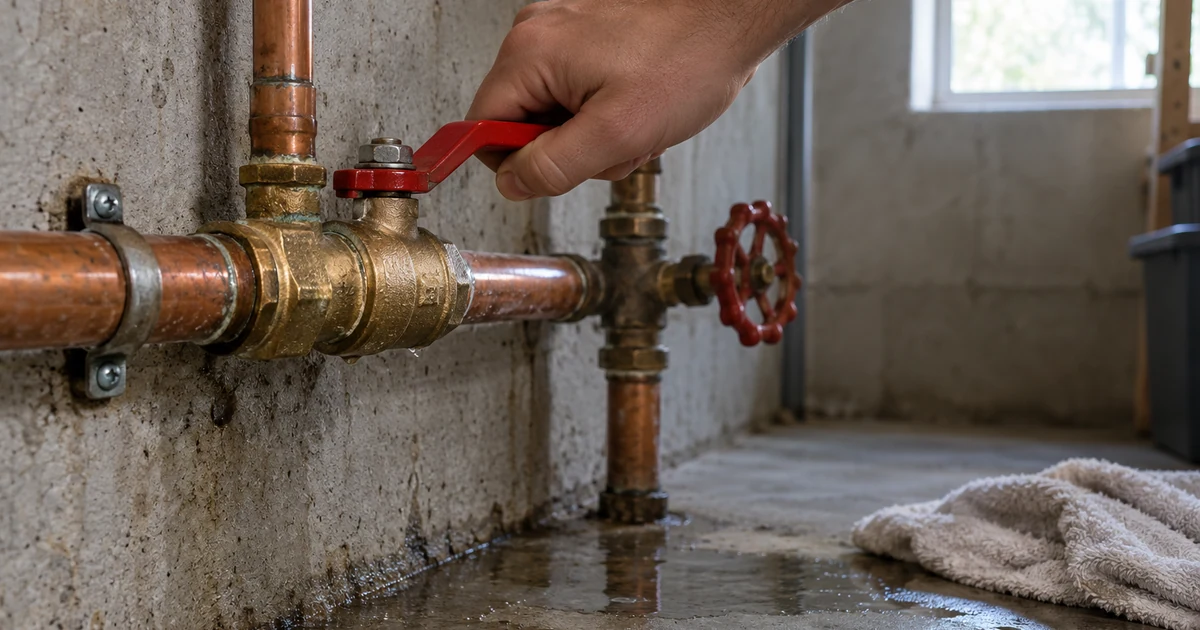
Shut off the water at the fixture or the main while you call, and get the person’s name and license number for your own records.
Questions and answers
What are good questions to ask a plumber before hiring one?
Ask for the license number and verify it on your state board, whether they carry general liability and workers' comp insurance, if the job is flat-rate or hourly, whether there's a trip fee, and if you'll get a written estimate before work starts. Then ask about the warranty on parts and labor, who actually does the work, and after-hours rates. Specific, relaxed answers are a good sign; vague or pushy ones are not.
How much would a plumber charge per hour?
Hourly rates vary widely by region, the type of job, and whether it's an emergency, so any single number online is a poor guide for your situation. Ask the plumber directly for their rate and whether a separate trip or diagnostic fee applies, and get it in writing. For defined jobs, a flat-rate quote often protects you better than an open-ended hourly bill.
How can I verify a plumber's license myself?
Search for your state licensing board or contractor board — type "[your state] plumbing license lookup" — then enter the number the plumber gave you. Confirm the license is active, in good standing, and matches the business name. This takes about two minutes and is far safer than taking their word for it.
What insurance should a plumber have?
Require two kinds: general liability, which pays if the work damages your home, and workers' compensation, which covers a worker injured on your property. Without workers' comp, you could be on the hook for an injury that happens in your house. Ask for a certificate of insurance by email before the visit.
Is a written estimate necessary before work starts?
Yes. A written estimate and scope of work should list the tasks, the parts included, the total, and what happens if more work turns up. It protects you from a price that quietly grows mid-job. A plumber who refuses to put it on paper is a reason to call someone else.
How long should a plumber's warranty last?
There is no single national rule, so ask how long parts and labor are each covered and whether your state sets a minimum. Get the warranty in writing and ask what voids it — using your own parts or letting another company touch the work later can cancel coverage. Reputable plumbers stand behind their repairs.
Should I just hire the plumber with the most years in business?
Experience and a good local reputation help, but years alone don't prove quality. A newer plumber who is licensed, insured, well-reviewed, and offers a written warranty can do excellent work, while an older company can coast on its name. Treat time in business as one factor among several, not the deciding one.
Do I need a permit for plumbing work, and who pulls it?
Bigger jobs like water heaters, repiping, and sewer or gas lines often require a permit and an inspection under your local building department's rules. The plumber should pull the permit and include its cost in the estimate. Skipping a required permit can cause problems when you sell the home, so confirm who's responsible before work begins.
Check a business before you call
Read what other customers say about a business, complaints and praise side by side.
Search for a businessKeep reading
Water running now? Shut the fixture valve or the main in minutes, reach the curb stop with a meter key, then drain and protect your home.
11-minute read
Confirm a plumber is licensed, bonded, and insured in about 10 minutes: look up the state board, call the insurer, and verify the bond before work.
10-minute read